

ACTIVITY
ACTIVITY
Seoul Cyber University event.
| Department of AI Smart Farm Convergence Partners with Gangbuk District Office to Build a “CommunityBased Smart Farm Model” | |||
|---|---|---|---|
| Dt | 2025.12.12 | Hit | 550 |
|
Department of AI Smart Farm Convergence Partners with Gangbuk
District Office to Build a “Community-Based Smart Farm Model” - Establishing the foundation for a virtuous cycle in
which young technical talent can move seamlessly from education and hands-on
training to entrepreneurship within the local community
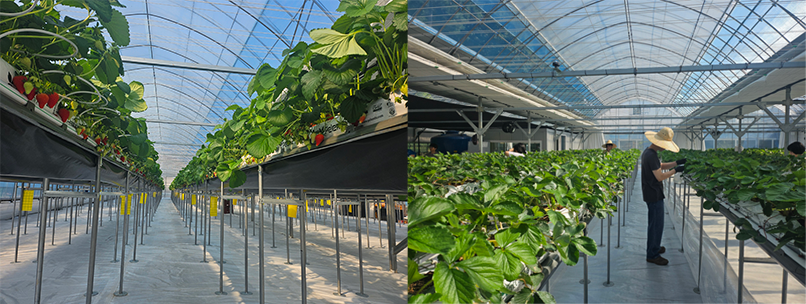
[Photo]
Students conducting strawberry cultivation practice at a smart farm operated by
the Gangbuk District Office
The Department of AI Smart Farm Convergence
successfully established an urban smart farm?based community cooperation model
over the course of 2025 through industry-academia?government collaboration with
the Gangbuk District Office.
By utilizing a smart farm training facility
developed on idle land within the Gangbuk District Office, the department
linked on-site student training with the formal curriculum. Students gained
opportunities to acquire both theoretical knowledge and practical skills by
directly practicing core technologies required in real industrial settings,
including AI-based environmental control, analysis of growth data for
strawberries and mini watermelons, automated irrigation systems, and smart
sensor operation.
The most distinctive feature of this
project is the implementation of a “local circulation smart farm model,” in
which fruits produced through student training are directly distributed and
sold within the Gangbuk district. With production, distribution, and
consumption all occurring locally, the model simultaneously promotes youth
talent development, revitalizes the local economy, and reduces carbon
emissions. As a sustainable urban smart agriculture model, it is receiving
positive evaluations and is expected to be widely benchmarked by other local
governments.
 Through this industry-academia-government
collaboration, the Department of AI Smart Farm Convergence achieved three key
goals: ▲training practice-oriented smart farm
professional,s ▲establishing a local government based
demonstration and training environment, ▲creating
social value through linkage with local agriculture and distribution systems
The Gangbuk District Office is also
recognized for achieving policy outcomes such as fostering future-oriented
agricultural talent and strengthening local food competitiveness by utilizing
urban smart agriculture infrastructure. In particular, the project is
meaningful in that it laid the groundwork for a virtuous cycle in which young
technical talent can progress from education and training to entrepreneurship
within the local community.
Professor Park Chan Soo, Chair of the
Department of AI Smart Farm Convergence, stated, “Our department operates the
nation’s first online smart farming curriculum, and through this collaboration
with the Gangbuk District Office, we have established a representative model of
community-based smart farming. Moving forward, we will continue to expand
advanced smart farm technology education and take the lead in building a
practical smart farming ecosystem that connects education, industry, and local
communities through cooperation with local governments, companies, and research
institutions.”
Meanwhile, the university’s Department of AI Smart Farm Convergence, which operates Korea’s first online smart farming curriculum, was established to cultivate professionals in smart farming and convergent technologies in AI and ICT. The department provides field-oriented practical knowledge through annual visits to domestic and international smart farm companies and special lectures by industry experts, while online theoretical courses enable students to participate without temporal or spatial constraints. Graduates may pursue careers as agricultural public officials in the smart farming sector such as agricultural extension officers or agricultural researchers or enter various industries including biotechnology companies, seed companies, crop breeding firms, agrochemical and crop protection companies, landscaping firms, and pharmaceutical companies. |
|||